

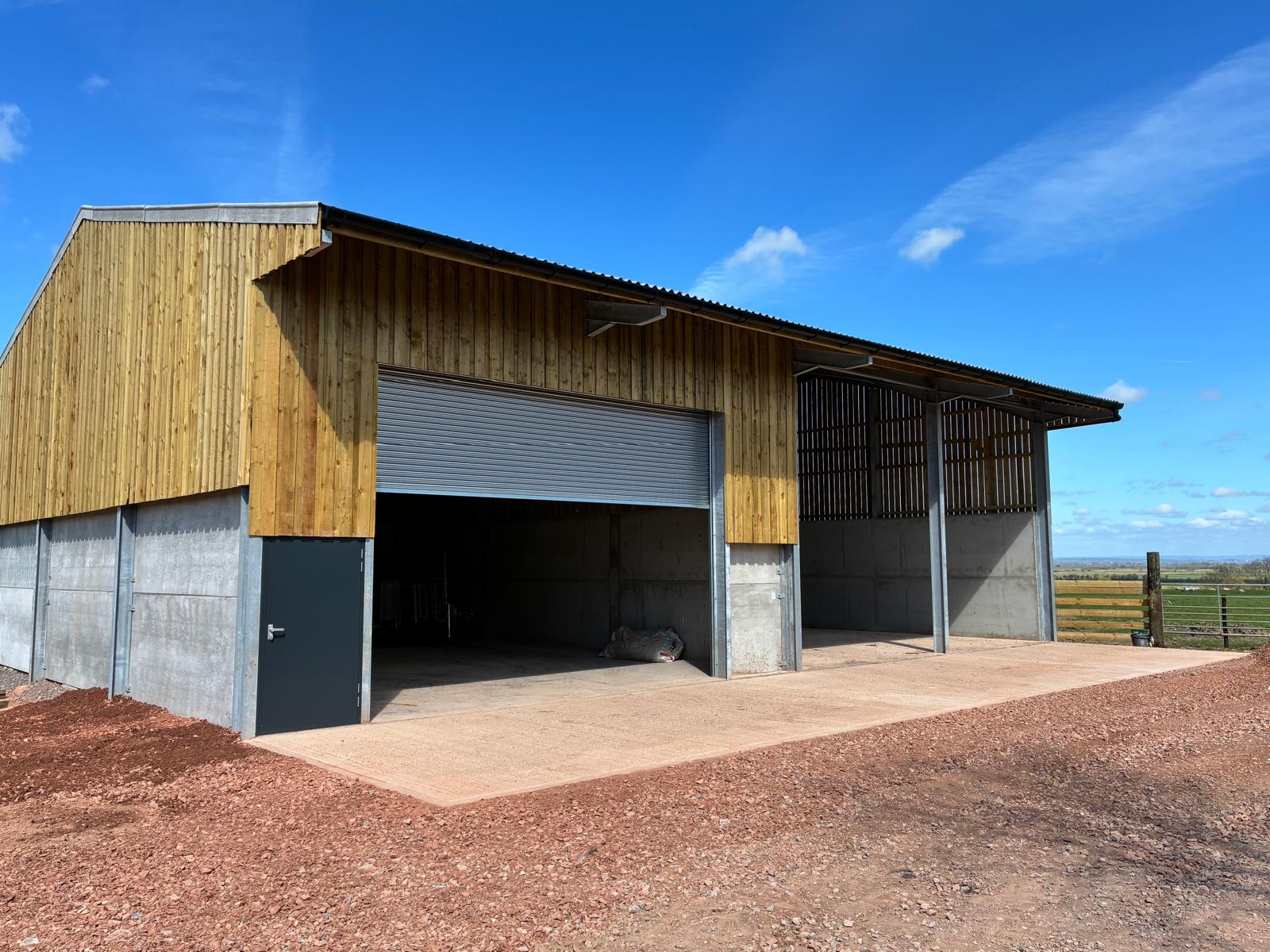
At Rose Vale Rural, we help farmers and landowners successfully prepare and submit planning applications for a wide range of rural development projects. Whether you’re looking to diversify your farm business, convert agricultural buildings, or develop new infrastructure, we provide clear, practical guidance every step of the way.
Agricultural Permitted Development rights can offer valuable opportunities to streamline the planning process for qualifying rural projects. When utilising these Rights, we ensure your proposal is compliant with the relevant legislation, prepare all necessary documentation, and manage the submission on your behalf, helping avoid delays, reduce risk, and maximise the likelihood of approval.
With a strong understanding of rural planning policy and some unique challenges faced by land‑based businesses, we deliver professional, commercially focused support tailored to your specific development.
Answers to your real estate questions and concerns.
Permitted Development Rights (PD rights) are statutory rights granted by Parliament that allow certain types of development to proceed without the need for formal planning permission. These rights are set out in the Town and Country Planning (General Permitted Development) (England) Order 2015 (GPDO 2015). In specific circumstances, they enable both operational development and changes of use to be undertaken without submitting a full planning application to the local planning authority. To qualify, proposals must meet defined conditions and limitations, and in many cases, prior approval from the local planning authority is still required. Commonly applied Permitted Development rights within an agricultural setting include: 1. Construction of new agricultural or forestry buildings or farm tracks (Part 6, Classes A and B) and; 2. Change of use of agricultural buildings to residential (Part 3, Class Q) or commercial (Part 3, Class R).
An agricultural appraisal for a farm worker’s dwelling is a detailed assessment used to justify the need for a temporary or permanent residential property, tied to an agricultural enterprise. It is typically required as part of a planning application and must demonstrate that the dwelling is necessary, passing two test; viability and essential functional need, to be located on site for the proper functioning of the farm. The appraisal begins with an overview of the holding, including its size, enterprise type(s), and operational structure. It then examines the year round labour requirements, often using recognised standards, being ‘Standard Man Days’ to calculate whether a full-time worker, residing on site, is justified. For a temporary dwelling, projected budgets are required to show the connected enterprise(s) will be viable. Once this has been proven, often for at least three years, an appraisal for a permanent dwelling (to replace the temporary dwelling) will need actual budgets to prove the established enterprise(s) have been viable and will remain sustainable. The essential functional need test must prove the accommodation needs to be located at a particular site, for example for the purposes of animal welfare, being in sight and sound of the livestock. It can include the need for supervision at unsociable hours to save travel from alternative distant accommodation. A clear, well-evidenced appraisal strengthens the case for approval and demonstrates that the proposal meets planning policy requirements.
An Agricultural Occupancy Condition (commonly referred to as an ‘agricultural tie’) is a planning condition that restricts the occupation of a property, often to individuals who are employed, or were last employed, in agriculture and/or forestry. As a result, the pool of potential buyers or tenants is limited, as occupation by anyone who cannot fulfil the restriction would breach the planning condition.
Yes, in some limited circumstances. To remove an agricultural tie, an application must be submitted to the local authority demonstrating that the restriction is no longer applicable. One simple way is to prove that the property has not fulfilled the condition for a continuous period of ten years or more. Another way is to prove that there is no longer any requirement for such a dwelling and that there is no market for the property with the restriction. Expert advice should be sought in either case.